
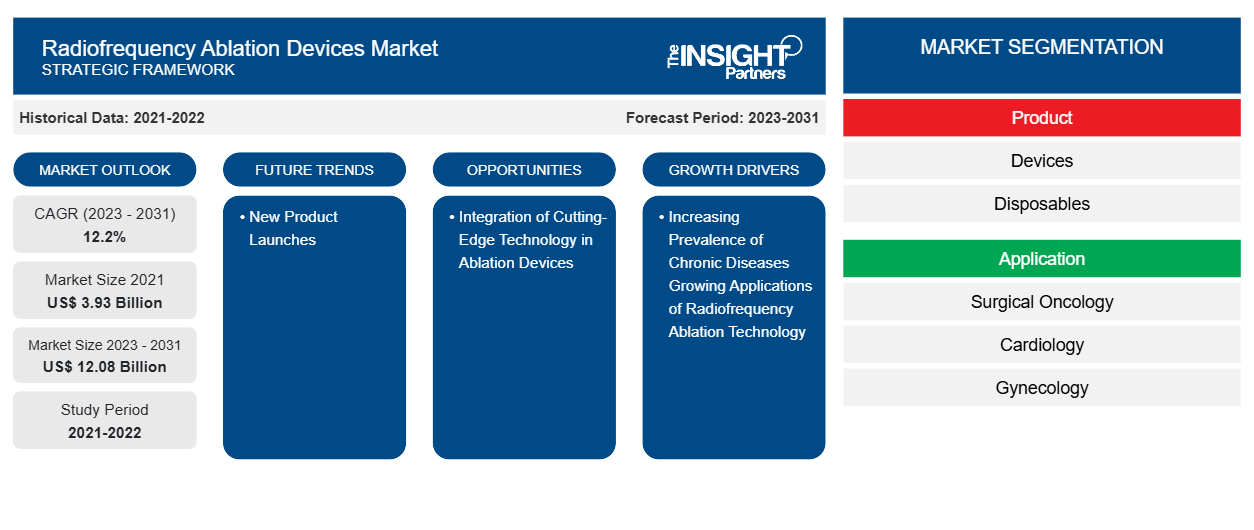
According to market projections, the radiofrequency ablation devices market size in 2021 stood at US$ 3.93 billion and is projected to reach US$ 12.08 billion by 2031 from US$ XX billion in 2023. The market is expected to register a CAGR of 12.2% during 2023–2031. This remarkable growth reflects increasing clinical acceptance and the expanding application scope of RFA technologies.
The global radiofrequency ablation (RFA) devices market is witnessing rapid expansion, fueled by the rising prevalence of chronic diseases, increasing demand for minimally invasive procedures, and continuous technological advancements in medical devices. Radiofrequency ablation is a widely used therapeutic technique for treating conditions such as cancer, cardiac arrhythmias, and chronic pain by using heat generated from radio waves to target and destroy abnormal tissues.
Download Sample PDF @ https://www.theinsightpartners.com/sample/TIPRE00004752
Key Market Drivers
- Rising Prevalence of Chronic Diseases
The growing burden of chronic diseases, including cancer, cardiovascular conditions, and chronic pain disorders, is a key driver of the RFA devices market. Cancer cases, particularly liver, lung, and kidney tumors, are increasing globally, leading to higher demand for effective treatment options. Radiofrequency ablation provides a minimally invasive alternative to conventional surgery, making it a preferred choice for both physicians and patients.
- Increasing Demand for Minimally Invasive Procedures
Patients and healthcare providers are increasingly opting for minimally invasive procedures due to benefits such as reduced recovery time, lower risk of complications, and shorter hospital stays. RFA procedures can often be performed on an outpatient basis, significantly improving patient convenience and reducing healthcare costs. This trend is strongly driving the adoption of radiofrequency ablation devices.
- Technological Advancements in RFA Devices
Continuous advancements in radiofrequency ablation technologies have enhanced the precision, safety, and efficiency of these devices. Modern RFA systems feature real-time imaging guidance, temperature monitoring, and automated control systems, improving treatment accuracy and outcomes. Innovations such as cooled-tip electrodes and multi-electrode systems are further expanding the application range of RFA.
- Growing Geriatric Population
The global aging population is more prone to chronic diseases such as cancer and cardiac arrhythmias. Elderly patients often prefer minimally invasive procedures due to lower surgical risks. This demographic trend is significantly contributing to the increased adoption of RFA devices across healthcare settings.
- Increasing Adoption in Pain Management
Radiofrequency ablation is widely used in pain management, particularly for chronic back pain, arthritis, and nerve-related conditions. The rising prevalence of musculoskeletal disorders is boosting demand for RFA-based pain management solutions, further driving market growth.
- Expansion of Healthcare Infrastructure
Improving healthcare infrastructure in emerging economies is facilitating access to advanced medical treatments, including radiofrequency ablation. Increasing investments in hospitals, specialized clinics, and diagnostic centers are contributing to market expansion globally.
Get Full Copy @ https://www.theinsightpartners.com/buy/TIPRE00004752
Market Segmentation Overview
The radiofrequency ablation devices market is segmented based on application, product type, end user, and geography.
By Application
- Oncology
- Cardiology (cardiac arrhythmias)
- Pain management
- Others
Oncology holds a significant market share due to the increasing use of RFA in tumor ablation procedures.
By Product Type
- RFA generators
- Disposable electrodes and probes
Disposable accessories dominate the market due to their recurring usage in procedures.
By End User
- Hospitals
- Ambulatory surgical centers
- Specialty clinics
Hospitals represent the largest segment due to the availability of advanced treatment facilities and skilled healthcare professionals.
Key Market Players
The radiofrequency ablation devices market is highly competitive, with several global players focusing on innovation and strategic expansion. Key companies include:
- Medtronic plc
- Boston Scientific Corporation
- Abbott Laboratories
- Johnson & Johnson (Biosense Webster, Inc.)
- AngioDynamics, Inc.
- Stryker Corporation
- Smith & Nephew plc
- CONMED Corporation
- Olympus Corporation
- Hologic, Inc.
These players are actively investing in research & development, product launches, and partnerships to enhance their market presence and expand their product portfolios.
Related Reports @
Radiofrequency Ablation System Market Size, Share & Growth by 2034
Radiofrequency Generator Market Size, Share & Demand by 2034
About Us –
The Insight Partners provides comprehensive syndicated and tailored market research services in the healthcare, technology, and industrial domains. Renowned for delivering strategic intelligence and practical insights, the firm empowers businesses to remain competitive in ever-evolving global markets.
Contact Us:
Contact Person: Ankit Mathur
E-mail: ankit.mathur@theinsightpartners.com
Phone: +1-646-491-9876
Also Available in : Korean German Japanese French Chinese Italian Spanish