
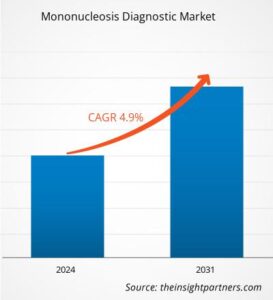
According to The Insight Partners, Global Mononucleosis Diagnostic Market is witnessing steady growth as healthcare systems worldwide continue to prioritize early disease detection and infectious disease management. Commonly known as “mono” or the “kissing disease,” mononucleosis is primarily caused by the Epstein–Barr virus (EBV) and is increasingly being diagnosed due to rising awareness, improved testing technologies, and expanding laboratory infrastructure.
One of the primary factors supporting market expansion is the rising burden of infectious diseases and the growing need for rapid diagnostic solutions. Increasing patient awareness and preventive healthcare initiatives are encouraging individuals to seek timely testing, especially among adolescents and young adults who are more susceptible to the infection. Additionally, technological advancements in serological and molecular diagnostic tools are enabling faster and more accurate detection, thereby driving market demand globally.
Get a Sample PDF – https://www.theinsightpartners.com/sample/TIPRE00019689
Market Drivers
Rising Prevalence of Infectious Diseases
The global increase in infectious disease cases continues to be a major driver for diagnostic testing. Mononucleosis remains widely prevalent among teenagers, college students, and young adults, particularly in urban populations. The growing awareness of viral infections and the availability of diagnostic facilities in emerging economies have significantly increased testing rates. Healthcare providers are emphasizing early diagnosis to avoid complications such as splenomegaly, hepatitis, and chronic fatigue syndrome, thereby boosting the demand for reliable diagnostic tools.
Growing Awareness and Preventive Healthcare
Public health campaigns and awareness programs are encouraging routine testing and early screening. Educational institutions, workplaces, and healthcare providers are increasingly recommending diagnostic testing to prevent disease transmission. Preventive healthcare trends are particularly strong in developed economies, where early diagnosis is seen as a cost-effective way to reduce hospitalization and long-term complications. This shift toward proactive healthcare is accelerating market growth.
Advancements in Diagnostic Technologies
Technological innovations are transforming the diagnostic landscape. Rapid test kits, enzyme-linked immunosorbent assays (ELISA), and polymerase chain reaction (PCR)-based diagnostics are improving testing speed and accuracy. The introduction of point-of-care testing solutions has made diagnostics more accessible, especially in outpatient clinics and remote healthcare settings. Automation in laboratories is further reducing turnaround time, improving workflow efficiency, and increasing adoption rates.
Expansion of Laboratory Infrastructure
The expansion of clinical laboratories and diagnostic centers across emerging markets is significantly contributing to the growth of the mononucleosis diagnostic market. Governments and private healthcare providers are investing heavily in laboratory infrastructure, enabling better accessibility to diagnostic services. This expansion is particularly noticeable in Asia-Pacific, Latin America, and the Middle East, where healthcare spending is steadily rising.
Increasing Healthcare Expenditure
Global healthcare expenditure continues to grow, with governments prioritizing early disease detection and infection control. Increased funding for diagnostic testing and research is encouraging the development of innovative testing solutions. Insurance coverage for diagnostic procedures in many countries is also making testing more affordable and accessible, further supporting market growth.
Market Trends
Shift Toward Point-of-Care Testing
One of the most significant trends in the market is the shift toward point-of-care testing (POCT). These tests provide quick results and reduce the need for centralized laboratory testing. POCT solutions are gaining popularity in emergency departments, outpatient clinics, and primary care settings. Their convenience and cost-effectiveness are expected to drive adoption in the coming years.
Integration of Automation and Digital Health
Automation and digital health technologies are reshaping diagnostic workflows. Advanced laboratory information systems and automated analyzers are improving data management and reducing manual errors. Digital integration also enables better patient tracking and faster result dissemination, enhancing overall healthcare efficiency.
Growing Demand in Emerging Economies
Emerging economies are becoming key growth markets due to increasing healthcare awareness and expanding diagnostic infrastructure. Rising disposable incomes and government initiatives to strengthen healthcare systems are creating significant opportunities for market players. The growing population in these regions is expected to further drive demand for diagnostic testing.
Challenges and Opportunities
Despite positive growth prospects, the market faces challenges such as limited awareness in rural areas and the high cost of advanced diagnostic tools in developing regions. However, these challenges present opportunities for companies to develop cost-effective and accessible diagnostic solutions. Strategic collaborations, product launches, and expansion into emerging markets are expected to create new growth avenues.
Competitive Landscape – Top Market Players
The mononucleosis diagnostic market is moderately competitive, with leading companies focusing on product innovation, partnerships, and geographic expansion. Key players include:
- Abbott Laboratories
- Thermo Fisher Scientific Inc.
- Bio-Rad Laboratories Inc.
- F. Hoffmann-La Roche Ltd
- Siemens Healthineers AG
- Danaher Corporation
- QuidelOrtho Corporation
- Meridian Bioscience Inc.
- Trinity Biotech Plc
- Creative Diagnostics
These companies are actively investing in R&D and expanding their diagnostic portfolios to strengthen their market presence.
Get Premium Research Report Market Size and Growth Report at:
https://www.theinsightpartners.com/buy/TIPRE00019689
Future Outlook
The future of the mononucleosis diagnostic market looks promising, driven by technological advancements, rising healthcare awareness, and expanding diagnostic infrastructure. Increasing investments in research and development will likely lead to more accurate and affordable diagnostic solutions. As healthcare systems continue to emphasize early disease detection and prevention, the demand for mononucleosis diagnostics is expected to remain strong through 2031.
Trending Related Reports –
Transplant Diagnostic Market Growth, Share & Trends by 2034
Hearing Aids Implants and Diagnostic Market Growth, Size & Forecast by 2034
Clinical Diagnostic Market Growth, Trends, and Forecast by 2031
About Us
The Insight Partners is a one stop industry research provider of actionable intelligence. We help our clients in getting solutions to their research requirements through our syndicated and consulting research services. We specialize in industries such as Semiconductor and Electronics, Aerospace and Defense, Automotive and Transportation, Biotechnology, Healthcare IT, Manufacturing and Construction, Medical Device, Technology, Media and Telecommunications, Chemicals and Materials.
Contact Us
Ankit Mathur | The Insight Partners
E-mail: ankit.mathur@theinsightpartners.com
Phone: +1-646-491-9876
Also Available in : Korean | German | Japanese | French | Chinese | Italian | Spanish