
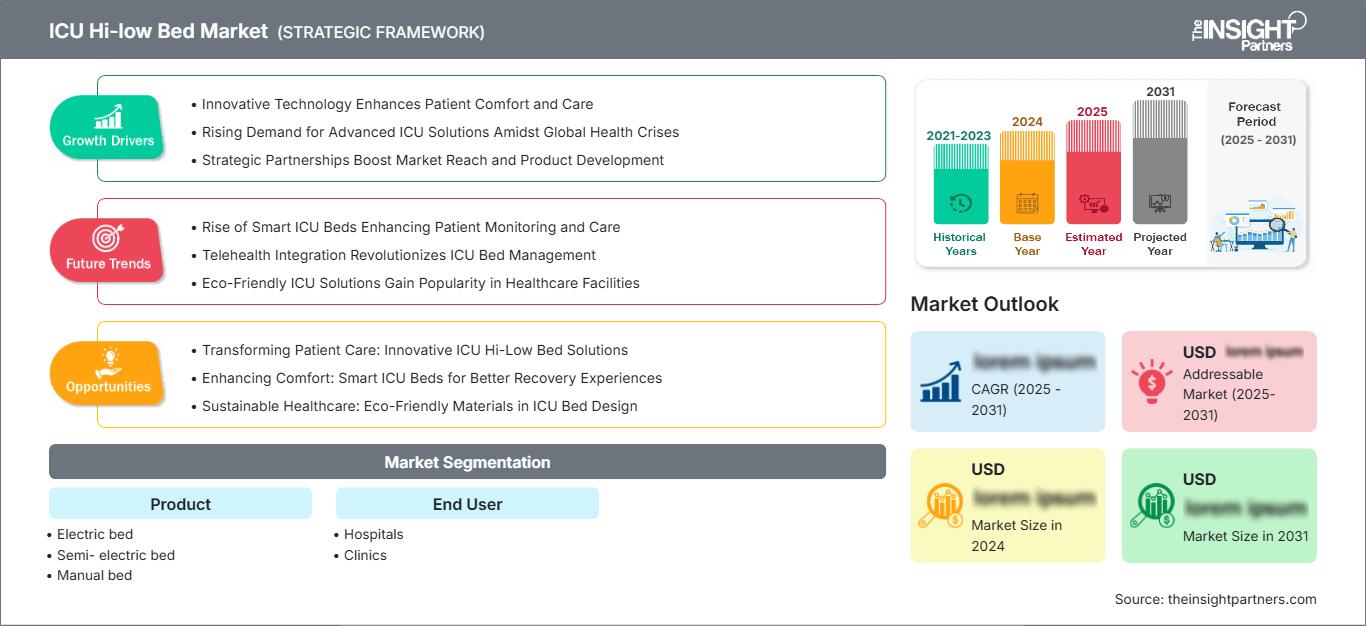
The global ICU hi-low bed market is experiencing significant growth, driven by increasing demand for advanced patient care solutions and rising hospitalization rates worldwide. According to market insights, the ICU hi-low bed market size is expected to reach US$ 5.00 billion by 2034 from US$ 2.74 billion in 2025, registering a CAGR of 6.91% during the forecast period of 2026–2034.
ICU hi-low beds are specialized medical beds equipped with adjustable height features that improve patient comfort, caregiver efficiency, and clinical outcomes. These beds are extensively used in intensive care units (ICUs) and critical care environments where patient monitoring and safety are paramount.
Download Sample PDF @ https://www.theinsightpartners.com/sample/TIPRE00014429
Market Drivers
- Rising Number of ICU Admissions
One of the primary drivers of the ICU hi-low bed market is the increasing number of ICU admissions globally. The growing prevalence of chronic diseases, coupled with rising cases of trauma and critical illnesses, has led to higher hospitalization rates.
Patients admitted to ICUs often require continuous monitoring and specialized care, making advanced hospital beds an essential component of healthcare infrastructure. The demand for ICU hi-low beds is increasing as healthcare facilities expand their critical care capacity.
- Increasing Geriatric Population
The aging population is a major factor contributing to market growth. Elderly individuals are more susceptible to chronic conditions such as cardiovascular diseases, respiratory disorders, and neurological illnesses, which often require intensive care.
As the global geriatric population continues to rise, the demand for ICU services and advanced hospital beds is expected to increase. Hi-low beds provide enhanced comfort and safety for elderly patients, making them highly suitable for long-term care.
- Technological Advancements in Hospital Beds
Technological innovation is transforming the ICU hi-low bed market. Modern ICU beds are equipped with advanced features such as electronic controls, pressure relief systems, integrated monitoring, and remote operation capabilities.
These innovations improve patient safety, prevent complications such as pressure ulcers, and enhance caregiver efficiency. The integration of smart technologies and automation is further driving the adoption of advanced ICU hi-low beds.
- Growing Focus on Patient Safety and Comfort
Healthcare providers are increasingly prioritizing patient safety and comfort, which is boosting the demand for ICU hi-low beds. These beds allow easy height adjustment, reducing the risk of falls and facilitating safe patient handling.
Enhanced ergonomics and user-friendly features improve patient experience and support better clinical outcomes. Hospitals are investing in advanced equipment to meet quality care standards, driving market growth.
- Expansion of Healthcare Infrastructure
The continuous expansion of healthcare infrastructure, particularly in developing regions, is creating new opportunities for the ICU hi-low bed market. Governments and private organizations are investing in building hospitals, ICU units, and specialized care facilities.
This investment is increasing the demand for medical equipment, including ICU beds. Rising healthcare expenditure and improved access to medical services are further supporting market expansion.
- Increasing Demand for Home Healthcare Solutions
The growing trend of home healthcare is also influencing the ICU hi-low bed market. Patients with chronic illnesses or long-term care needs are increasingly opting for treatment at home.
Portable and adjustable ICU beds designed for home use are gaining popularity, offering convenience and comfort. This shift is expanding the market beyond traditional hospital settings.
Get Full Copy @ https://www.theinsightpartners.com/buy/TIPRE00014429
Key Market Trends
- Adoption of Smart ICU Beds: Integration of sensors, AI, and remote monitoring capabilities
- Growth in Electric Hi-Low Beds: Increasing demand for automated and easy-to-operate systems
- Focus on Infection Control: Development of antimicrobial bed surfaces
- Rise in Home Care Beds: Expansion of ICU-grade beds for home use
Market Segmentation Insights
The ICU hi-low bed market is segmented based on type, application, end user, and geography:
- By Type: Electric, semi-electric, and manual beds
- By Application: Critical care, long-term care, and post-operative recovery
- By End User: Hospitals, specialty clinics, and home healthcare settings
Electric ICU hi-low beds dominate the market due to their advanced features and ease of use.
Key Players in the ICU Hi-Low Bed Market
The global ICU hi-low bed market is highly competitive, with key players focusing on innovation, product development, and strategic partnerships.
Leading Companies:
- Hill-Rom Holdings, Inc. (Baxter International)
- Stryker Corporation
- Invacare Corporation
- Getinge AB
- LINET Group SE
- Paramount Bed Holdings Co., Ltd.
- Joerns Healthcare LLC
- Arjo AB
- Medline Industries, Inc.
- Gendron Inc.
These companies are investing in research and development to introduce innovative products and maintain a competitive edge in the market.
Competitive Landscape and Strategic Insights
The ICU hi-low bed market is characterized by continuous product innovation and strategic collaborations. Key players are focusing on enhancing product features, improving durability, and expanding their distribution networks.
Mergers, acquisitions, and partnerships are commonly used strategies to strengthen market presence and expand geographic reach. Companies are also investing in digital technologies to develop smart ICU beds that improve patient monitoring and care efficiency.
Market Forecast and Future Outlook
The ICU hi-low bed market is expected to witness robust growth through 2034, driven by increasing healthcare demand and technological advancements. The integration of AI and IoT technologies in hospital beds is anticipated to revolutionize patient care.
Future developments such as remote monitoring systems, predictive maintenance, and personalized patient care solutions will further enhance the capabilities of ICU hi-low beds.
As healthcare systems continue to evolve, the demand for advanced patient care equipment will increase, creating significant growth opportunities for market players.